
Shadow Work in the Dark: How to Accept and Heal Repressed Aspects of Ourselves in the Darkness
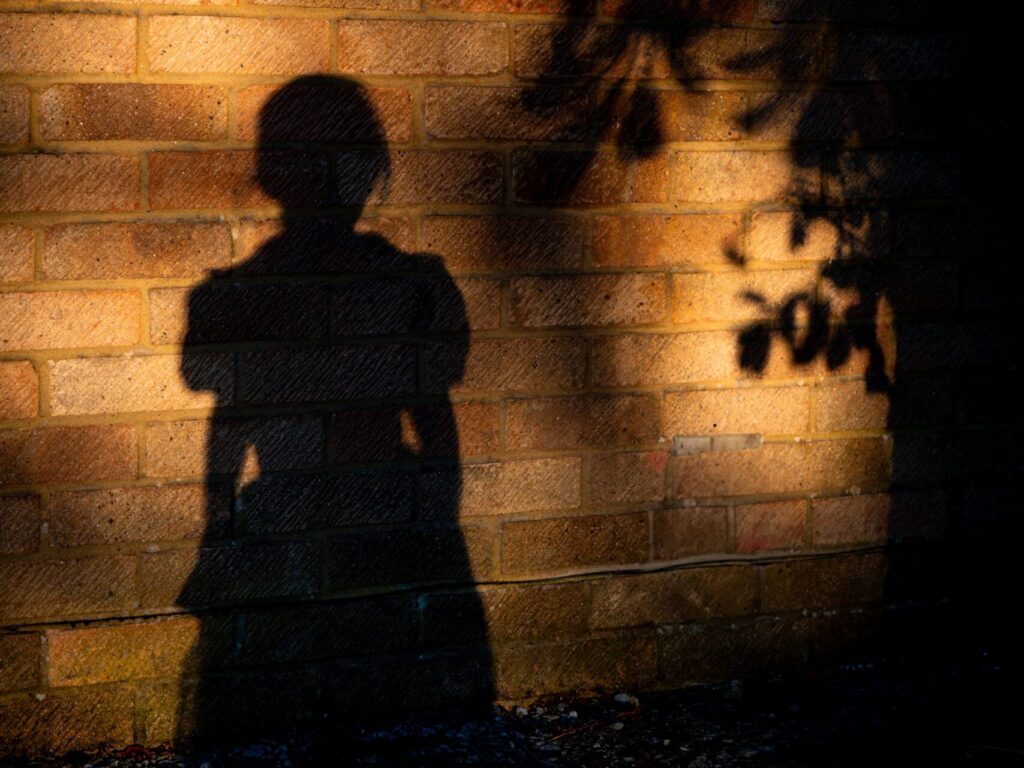
There’s a moment in almost every extended darkness retreat that no one really expects—and yet almost everyone experiences it at some point. You’re lying there, surrounded by complete darkness, and suddenly something surfaces that you thought you’d long since forgotten. An old feeling. A memory you never really processed. A conflict you buried years ago without ever truly resolving it.
That's no coincidence. It has a name: shadow work.
What a Shadow Actually Is
The term was coined by the psychiatrist C. G. Jung, who used it to describe the parts of ourselves that we have repressed, denied, or split off for a wide variety of reasons. These can be painful experiences, but also anger, envy, grief, or needs that were never welcome in our social circles. We learn early on to hide certain parts of ourselves because they make us uncomfortable or because we were afraid of being rejected for them. However, these aspects do not disappear as a result—they simply move from the light of our consciousness into the shadows.
In everyday life, they usually remain well hidden there. We’re busy, distracted, just going through the motions. There are a thousand things that capture our attention before the shadow even has a chance to reveal itself. But in the darkness, completely free of external stimuli, all of that falls away. There is nothing left to keep the shadow at bay. And so it begins to reveal itself slowly—not as an attack, but as something that has been waiting a long time to finally be seen.
Why this is no cause for concern
When old issues suddenly resurface, many people initially react with resistance. They think something is wrong, or they try to quickly avoid the feelings that are coming up. But the exact opposite is true: the resurfacing of these repressed aspects is a good sign. It means the process is working.
The shadow is not an enemy to be fought. It is more like a child who has sat alone in a dark room for a long time and now finally wants to be heard. The more we try to suppress it or push it away, the louder it makes itself heard—often in the form of inner restlessness, old patterns, or recurring conflicts in our lives whose true root causes we have never fully understood. If, on the other hand, we meet it with openness, it gradually loses its power over us.
Darkness as a Safe Space
What makes a dark retreat special is that it creates a space where this encounter can take place safely. Without external judgment, without the gaze of others, without the worry of having to explain yourself to anyone. You are alone with yourself—and that is exactly what makes it possible to look within honestly.
In this safe space of stillness, you can meet whatever arises with compassion rather than judgment. You don’t have to analyze or immediately understand these old feelings. It’s enough to simply let them be, to observe them, and to give them space. Often, this alone brings about a fundamental shift: a feeling that was perceived as threatening for years turns out to be what it always was—a wounded, vulnerable part of yourself that wanted nothing more than to finally be accepted.
This kind of encounter heals not because it undoes the past, but because it allows you to relate to it in a new way. What was once separated from you can become part of you again. And with every part you integrate in this way, you become a little more whole.
Conclusion
Shadow work in the dark is not a comfortable experience—but it is one of the most valuable aspects a dark retreat has to offer. The old issues that surface in the silence are not a disruption of the process. They are the process itself. They don’t surface to torment you, but because they finally want the attention they never received in the hustle and bustle of everyday life.
Those who are willing to face these aspects with compassion rather than fear will have one of the most profound experiences a person can have: encountering themselves in their entirety—with all their light and all their shadows. At the end of this journey lies not perfection, but something more valuable: genuine inner peace, which does not depend on everything having been good, but on the fact that nothing needs to be hidden anymore.
Darkness doesn't take anything away from you. It gives you back the parts of yourself that you needed most.