
The Third Eye—When the Gaze Turns Inward
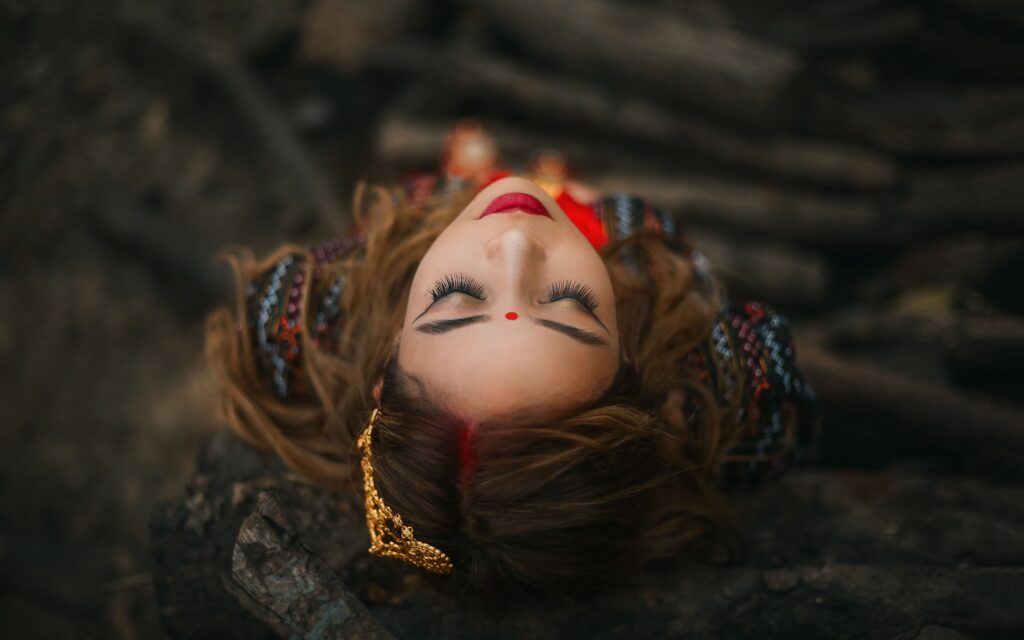
What do we perceive when everything around us grows quiet and external images fade away? Perhaps we encounter thoughts that rarely find a place in our daily lives. Perhaps feelings, inner images, or simply a soothing sense of calm emerge. Many people associate such experiences with the third eye.
This topic has been with me for many years—through my time in India, my own spiritual practice, and guiding people during dark retreats. I find it fascinating to explore the different perspectives: What do we know about the pineal gland? What significance does the third eye hold in spiritual traditions? And what can we experience for ourselves when we take the time to listen inwardly?
These questions can coexist. We don't have to have an explanation for everything right away. At the same time, I want to draw a clear distinction between what can be described biologically and what we experience personally and interpret spiritually.
Is there really such a thing as the third eye?
In fact, there is something in the animal kingdom known as the “third eye”: Some reptiles have what’s called a parietal eye on their heads. It detects light without seeing images the way our eyes do. If you’re interested in this biological background, you can find an article about it in DER STANDARD.
In this context, the pineal gland is also frequently mentioned. In humans, it is located deep within the brain and produces the hormone melatonin. In this way, it helps signal to our bodies when it is night and time to sleep. This connection between light, darkness, and the pineal gland often leads to associations with the spiritual “third eye.”
If you'd like to learn more about the body's physiological mechanisms, Kenhub offers an introduction to the pineal gland. Spektrum der Wissenschaft also explores the pineal gland and its hormone, melatonin.
However, the pineal gland and the spiritual "third eye" are not the same thing. One is a physical organ with functions that can be studied. The other, in spiritual traditions, describes our inner perception.
What We Mean by the "Third Eye"
In many yogic and tantric traditions, the third eye is associated with the Ajna Chakra, the forehead chakra. Its symbolic location is between the eyebrows. It represents intuition, clarity, and the ability to see more deeply.
Maybe you've experienced moments like this: You fall silent, and suddenly you realize something that had been lost in the daily hustle and bustle. You sense more clearly what's good for you or where you need to set boundaries. A question you've been pondering for a long time takes on a new direction.
Experiences like these can be linked to the concept of the "third eye." For me, inner perception also means being mindful of my own impressions. A feeling deserves to be taken seriously, yet sometimes it still takes time before we understand what it’s trying to tell us.
You don't have to see or experience anything special to explore this topic. Simply being aware of what's happening inside you right now can be a start.
Why Darkness Can Lead Us Inward
In our daily lives, our attention is almost constantly focused outward. We look at screens, read the news, take care of others, and often already have the next task on our minds.
In the darkness, many of these external impressions fade away. This can feel strange at first. When things quiet down outside, we sometimes only then realize how much is going on inside us.
Over time, space can open up to explore these sensations more deeply. Some people describe inner images, colors, or patterns of light. Others become more aware of their bodies and emotions. Still others sleep a lot at first and enjoy finally not having to accomplish anything.
The experience of this time varies greatly. Even if no particular images come to mind, the encounter with one’s own inner peace can be deeply moving.
For me, this is a beautiful connection to the third eye: we give our inner perception time and attention. What develops from this and what meaning you find in it can remain open-ended.
Give your inner perception time
There are various ways to connect with the third eye. Meditation, mantras, mindful breathing, or spending time in the dark can all be opportunities to become more attuned to subtle perceptions and to deepen one’s spiritual practice.
At first, you might only notice small changes: You’ll find it easier to relax, become more aware of your feelings, or discover a new way to tap into your intuition. You might also experience something that surprises you and for which you don’t have the words to describe at first.
It’s important to me that you give yourself space to explore your own experiences. You’re allowed to be curious, try things out, and see what works for you. What other people describe can serve as inspiration—but your own path may still unfold in a completely different way.
Especially when exploring the third eye, it’s easy to develop the expectation that you have to see or sense something specific. But even the subtle experiences are valuable. Take your time to get to know them and see what significance they hold for you and your daily life.
A little invitation for your everyday life
If you'd like, take five minutes today just for yourself. Find a quiet place, get comfortable, and gently close your eyes.
First, notice how you’re sitting. Let your breath come and go without trying to change it. Then gently direct your attention to the area between your eyebrows. Keep your eyes relaxed—you don’t need to strain or force anything.
Maybe you’ll notice something; maybe your thoughts will wander. Both are okay. Just keep coming back to your breath. If focusing on your forehead feels uncomfortable, keep your attention on your breath or on your feet on the floor.
To wrap things up, tune in to your body once more and gently open your eyes. You might want to write down a few words afterward:
How am I feeling right now? What's on my mind? What would do me good today?
If you enjoy meditating with a mantra, you can also use a mala. The repetitive touch of the beads can serve as a wonderful anchor for your practice.
Little Companions for Your Meditation
Maybe you already have a spot at home where you like to unwind. Sometimes all it takes is a cushion or a familiar object to help us consciously set aside time for ourselves.
At the Spiritbalance Shop, you’ll find a variety of items you can incorporate into your personal practice. In addition to our malas, there are also yantras available as meditation symbols. If you enjoy meditating with an image and focusing your gaze first on a calm focal point, this might be something for you.
You might also be drawn to an orgonite talisman, such as one featuring the “third eye” motif. You can wear it as a personal companion or place it at your meditation spot.
If you're not sure which mala is right for you, feel free to browse our mala guide. And if you're looking for something else to enhance your practice space, you'll find more inspiration in the yoga and incense sections.
Take your time to see what speaks to you. Items like these can take on personal meaning and remind you to pause and reflect in your everyday life. Your experience comes from the time and attention you give yourself.
Going Within with Good Guidance
Mindful support is especially important to me when it comes to intense experiences. If inner images or feelings become overwhelming, you don’t have to face them alone. Talk about what you’re experiencing, and seek medical or psychotherapeutic help if these sensations frighten you, persist, or interfere with your daily life.
A dark retreat requires a stable mental state and is not a substitute for medical or psychotherapeutic treatment. During an initial consultation, we can discuss together whether this type of retreat is right for you and your situation at this time.
Perhaps it begins with a moment of silence
You don't have to decide today whether you want to do a dark retreat. Maybe you'd like to read up on it first or try out short periods of silence at home. For that , you'll also find the course "Dark Retreat at Home" among our online offerings .
And perhaps you’ve been feeling the desire for some time now to step away from your everyday life for a few days—to have time for yourself and the space to tune into what’s going on inside you.
If you have any questions or would like to find out whether a dark retreat might be right for you, I look forward to getting to know you.
💬 You can book a free introductory consultation here.
If you already know you'd like to come, you can send us your booking request directly, including your preferred dates.
Perhaps it's precisely during a quiet moment that you begin to feel more clearly again what's important to you.